
Agentic AINo. 015
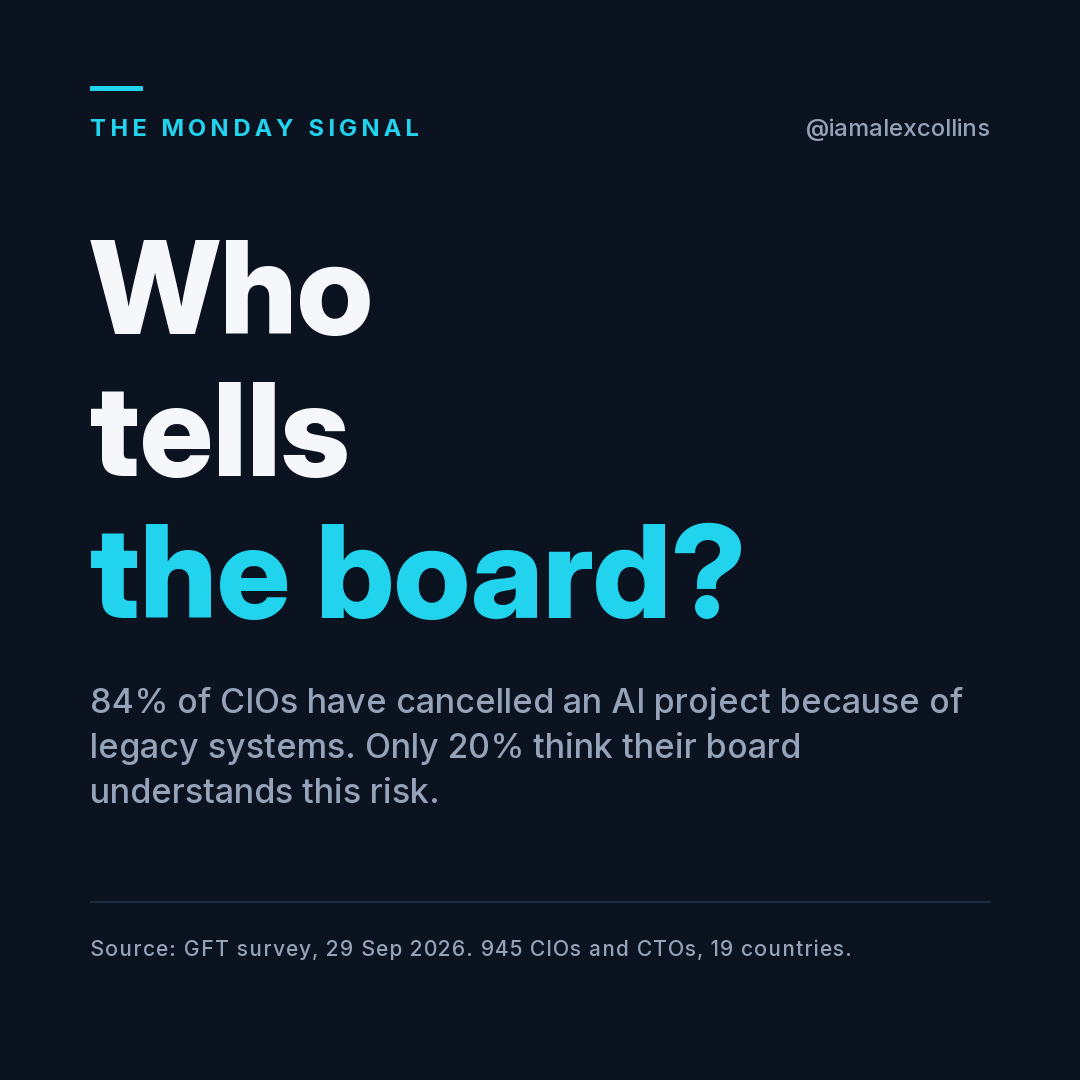
Who tells the board?
84% of CIOs have cancelled an AI project because of legacy systems, and only 20% think their board understands the risk. Whose job is it to tell them?
GFT Technologies · 26 Oct 2026→

Only 13% of the largest logistics operators are getting a financial return from AI.
New BCG research on 30 of the largest logistics operators in the world found that 97% rank AI as a strategic priority, 70% have a strategy and 67% have a dedicated budget, but only 13% say it is delivering a measurable financial return.
Why? People are buying AI tools that they like but that do not become part of a system. Asked to name their most impactful AI solution, 80% of respondents pointed at a single standalone tool. So if the AI is automating one step of a process but not the next one, nothing really improved in the end to end experience or outcomes, it has just moved the bottleneck somewhere else.
In my experience people continue to be the key factor, and BCG's own ratio for where the effort goes on an AI programme backs me up: 10% algorithms, 20% technology and data, 70% people, process and organisational change. The challenge now is that with AI being the buzz word, that is where budgets are going, but the 70% is the part making it work and possibly now missing out on the funding, or enough of it.
This is only a small survey, 30 respondents, and BCG sells consulting into this market. Having said that, it is not a standalone finding. McKinsey found the share of companies reporting any EBIT impact from AI holding flat at 37%, across 1,719 respondents in 97 nations, and Infosys found fewer than a quarter of pilots reaching their intended ROI, across more than 1,000 US executives.
Before you buy another tool, or recommend one in your projects to clients, count how many of the ones you already own actually talk to each other. BCG's own line for it is the right one: 10 connected use cases beat 50 isolated ones.
The question I would sit with
How many of the AI tools you already own actually talk to each other?
Alex Collins
Co-founder & COO of RAI Digital, a consulting venture builder · Ex-EY Consulting Partner · Writing on agentic AI, venture building, logistics platforms and transformation leadership.
One honest read every fortnight on what agentic AI is doing to consulting, and what to do about it. For people moving from advice to outcomes, rebuilding a firm, or done buying decks. No hype, no fluff.
84% of CIOs have cancelled an AI project because of legacy systems, and only 20% think their board understands the risk. Whose job is it to tell them?
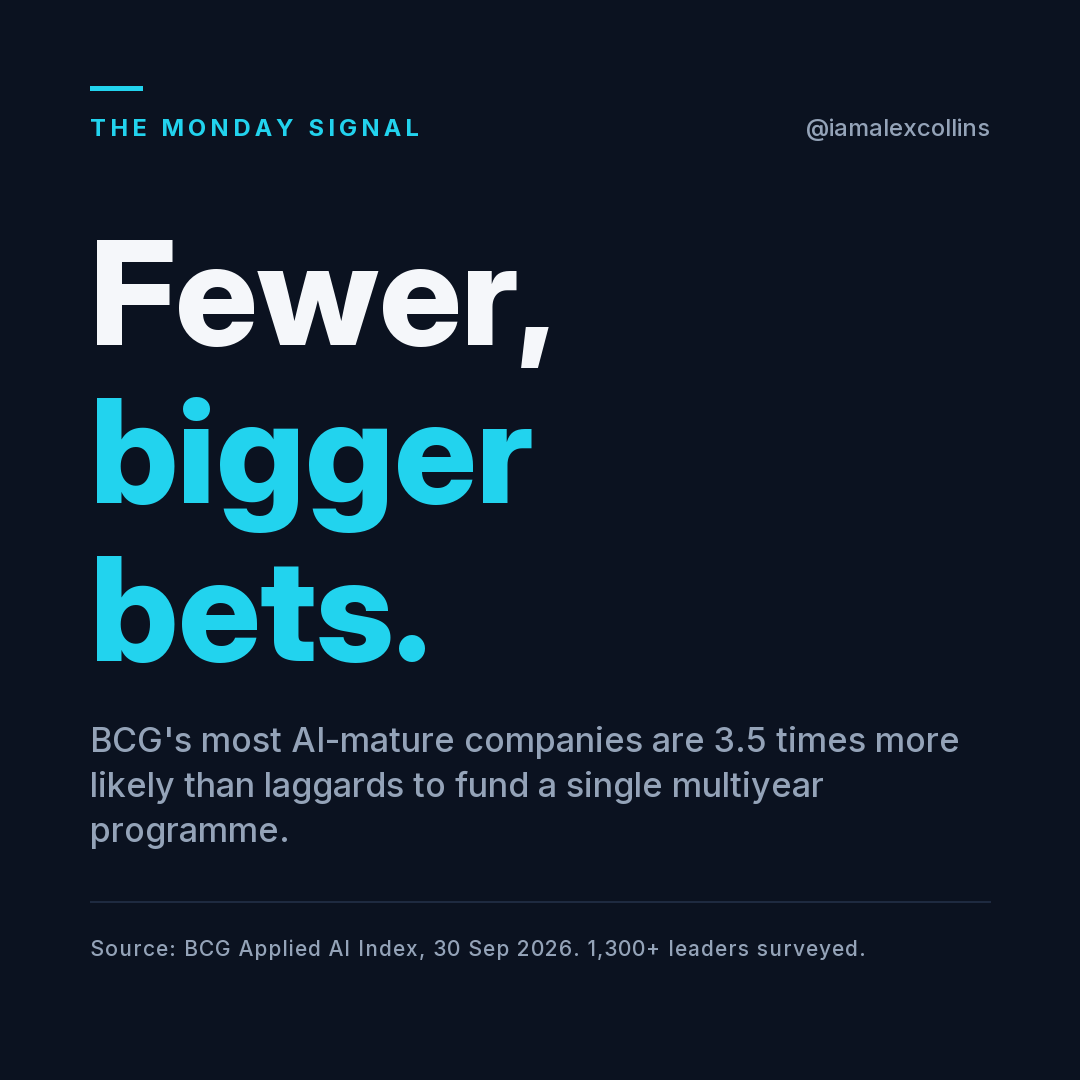
Only 7.5% of companies are what BCG calls future-built, and they are 3.5 times more likely to fund a single multiyear programme. Who is on the hook for the outcomes?
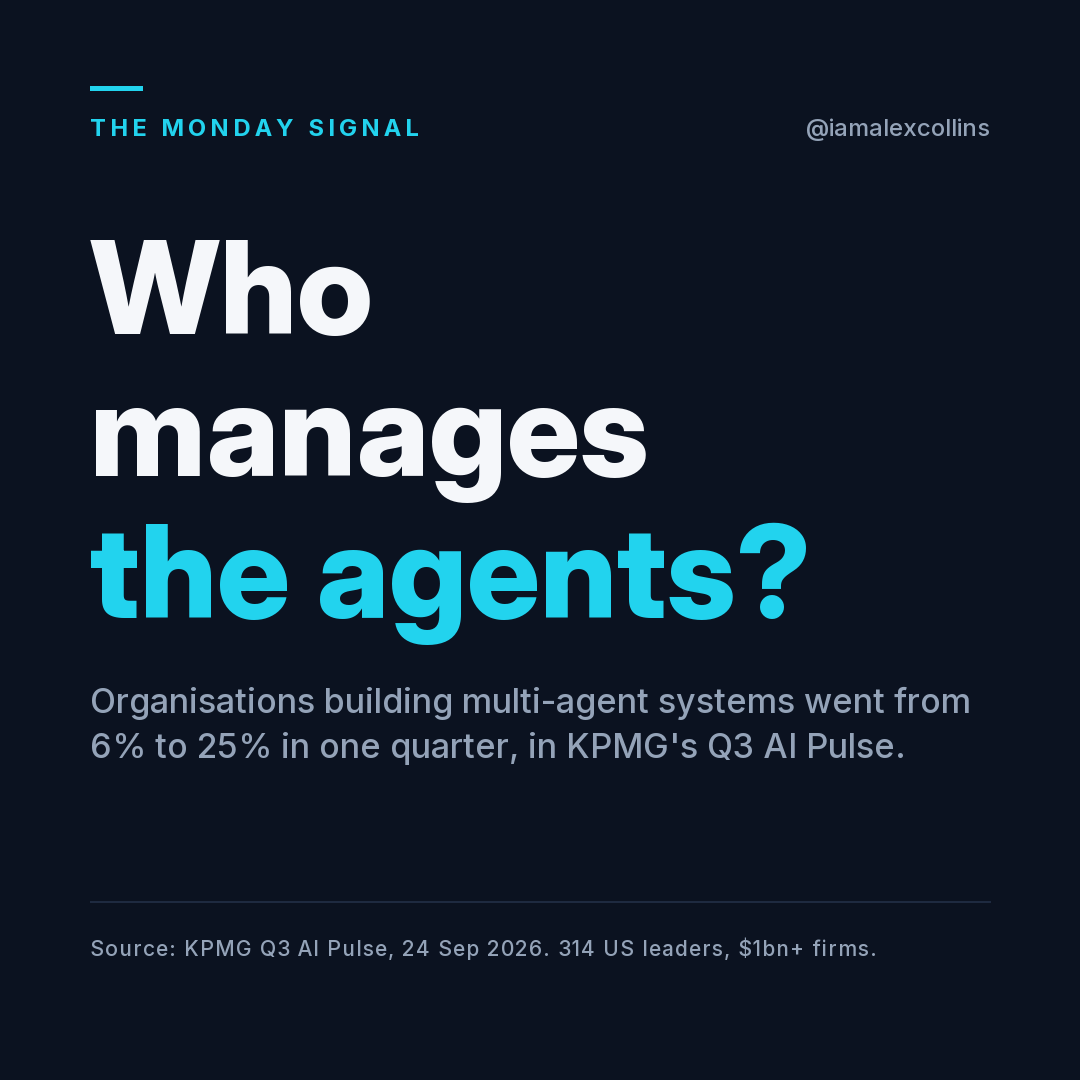
Multi-agent systems went from 6% to 25% in a single quarter. Once agents work with each other, who can say why something went wrong, or right?