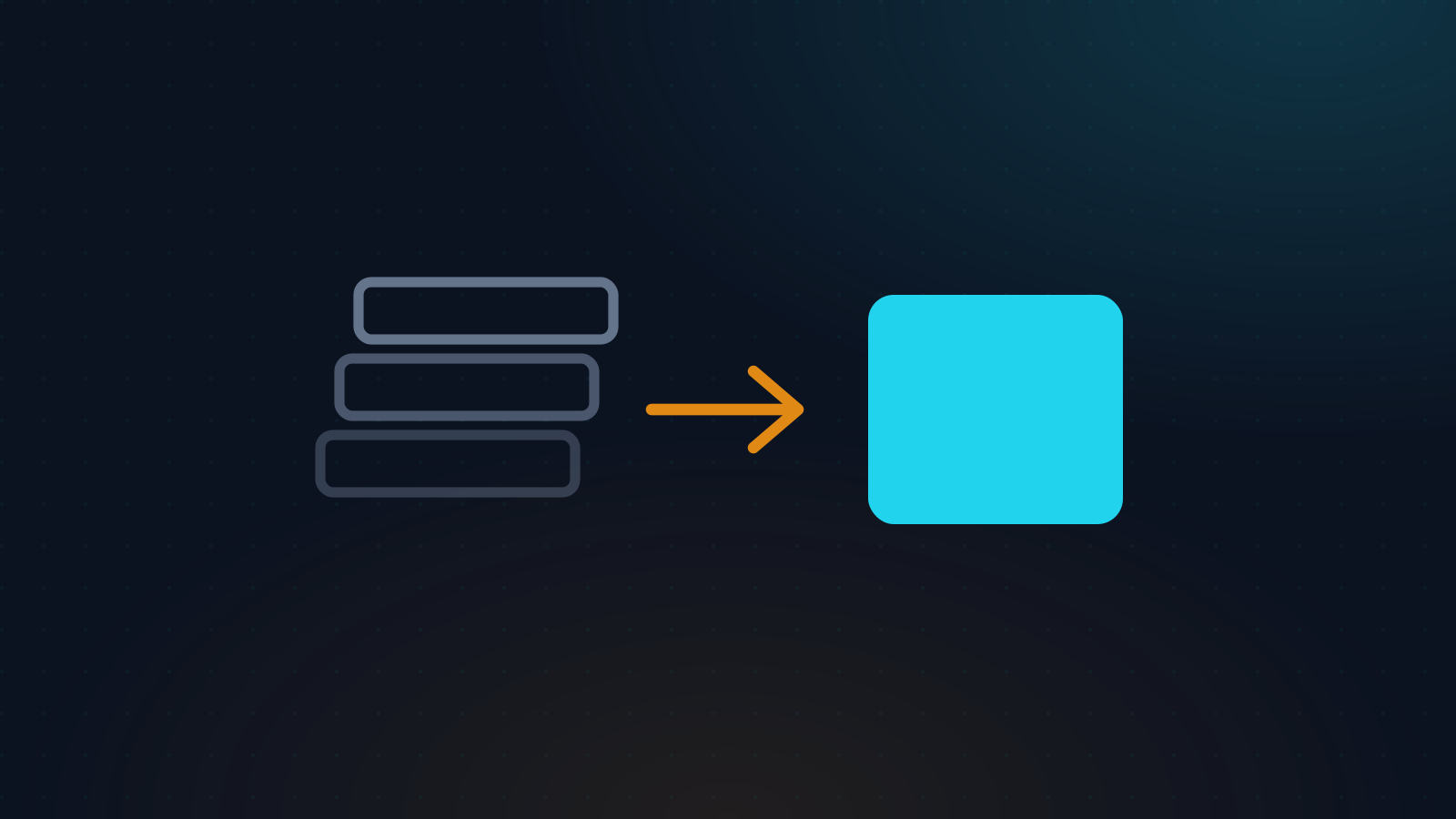
AI has not killed consulting. It has killed the part of it that was only ever a nicely formatted opinion.
For most of my career the deal was simple enough. You were paid for the thinking: define the problem, shape the options, present the recommendation, and then leave the genuinely hard part, the delivery, to someone else. The advice was the product. Whether it ever made it into the real world was somebody else's problem to carry.
What has changed is not the quality of the advice, it is the distance between a good idea and a working version of it. That distance has collapsed. When a client can get a credible first answer out of a model in an afternoon, the recommendation on its own starts to look like a fairly thin offer.
So the premium moves. It moves to the people who can go past the diagnosis: sit inside the business, redesign the workflow, build the thing, own the value case and stay long enough to make the change actually stick. Not the cleverest deck, the owned outcome. That capability has a name, and it is deployment muscle.
What deployment muscle actually is
Deployment muscle is the ability to take an idea all the way into live operation and be accountable for what happens next. It is not a brighter strategy or a slicker model, it is the unglamorous work that sits between a recommendation and a result: redesigning how the work actually flows, wiring a change into the systems people use every day, handling the edge cases nobody demoed, and holding a number once the applause has stopped.
I made that move myself, from advising to operating and building, and the thing that caught me off guard was how little of the old job carried the new one. The structured thinking transferred, but the accountability was new and it quickly became everything. I wrote about what that switch is really like in From Consulting to Building, because the gap surprised me and I would rather you saw it coming.
Why AI is the reason, not the fashion
It is easy to treat this as one more wave of AI commentary, but it is something sharper than that. Agentic AI changes whether the deck is worth buying at all. When analysis-for-hire can be generated in an afternoon, the value of analysis-for-hire collapses, and what is left is a delivered, governed outcome that somebody is willing to stand behind.
That is also why deployment is harder than it looks. The gap between a slick AI pilot and a scaled operation is never more technology, it is operating model design: who decides what, who owns the outcome, what happens when the agent is wrong, and how the people around it are actually supported. I set out the four questions I make every team answer in Your Next IT Hire Might Be an AI Agent. The teams that can answer them have deployment muscle, and the teams that cannot have a demo with ambition.
You can see the same shift in how the elite firms themselves are changing. Writing in the UK's Guardian newspaper, Alice Lassman describes the slow death of the prestige consulting career: internal AI now does the analysis that juniors once cut their teeth on, and the fee model is moving to "fixed fees tied to deliverables rather than time inputs". That last phrase is the whole argument in passing. When the market stops paying for hours and starts paying for delivered things, it is pricing deployment muscle, even if nobody in the room uses the words. The piece leaves the story on an unsettling note, that nobody, including the firms, quite knows what replaces the old apprenticeship. I think the answer is already visible: the work, and the reward, move to whoever can own the outcome.
The proof is in who measures
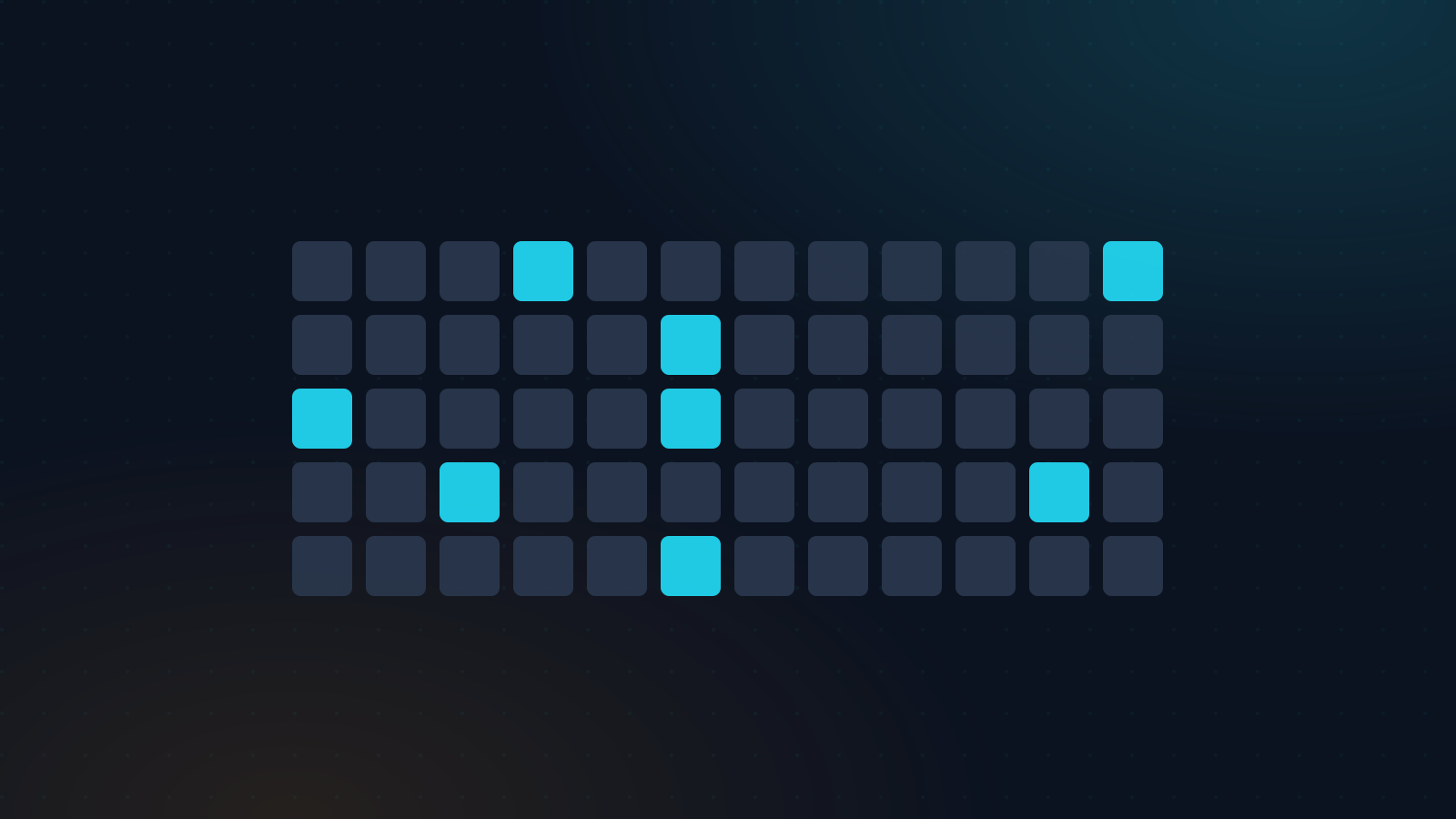
Here is the figure that sits underneath all of this. In its 2026 Digital Government Outlook, the OECD found that AI is now used in at least one area of government in 97 percent of member countries, but only 28 percent report doing any real assessment of whether those uses actually deliver. Adoption is nearly universal and proof is rare, and that gap between activity and outcome is exactly the space deployment muscle is paid to close.
What this means depending on where you sit
The shift lands differently for three kinds of reader, and the newsletter this piece launches is written for all three.
If you are a consultant, deployment muscle is what your next move should be built on, whether you reshape how you deliver where you are or step into an operating or building role. The one worth having is where you own a number and AI is doing real work, not where you have swapped one deck for another. The skills that travel, and the ones you have to build on purpose, are in The Skills Consultants Need to Thrive in Tech.
If you run a practice, this is the rebuild, and it is uncomfortable, because it usually means changing what you charge for and how you staff before the market forces you to.
And if you are the client, the one who keeps being handed beautiful decks that change nothing, this is your leverage. Stop buying the analysis and start buying the outcome, with a number on it and someone on the hook for it.
Your takeaway, right now
You do not need a strategy to start building deployment muscle, you need one piece of real work. So here is the question I would sit with: what is one recommendation you have made recently, or one you have been handed, that you could actually build and put to work this month, rather than present and walk away from?
Pick it, attach a number to the outcome, and find the one place AI can do real work inside it. That is the whole move, in miniature. If you are mapping the bigger version, the jump from advising to operating, I have put the honest version into a free guide: The New Consulting Transition Map.