At the Parcel+Post Expo in Amsterdam, I sat on a panel about the next frontier of logistics, and one line from Microsoft's Simon Waelchli stuck with the whole room: "the future IT department will be the HR department of agents."
It landed because it is true. For the past few years most of us have been asking what AI can do. The question I am wrestling with day to day at Infinite PL is a different one: how do you actually run an organisation where AI does some of the work?
That is not a technology question. It is an operating model question, and I think it is the one most teams are underestimating.
What actually changes
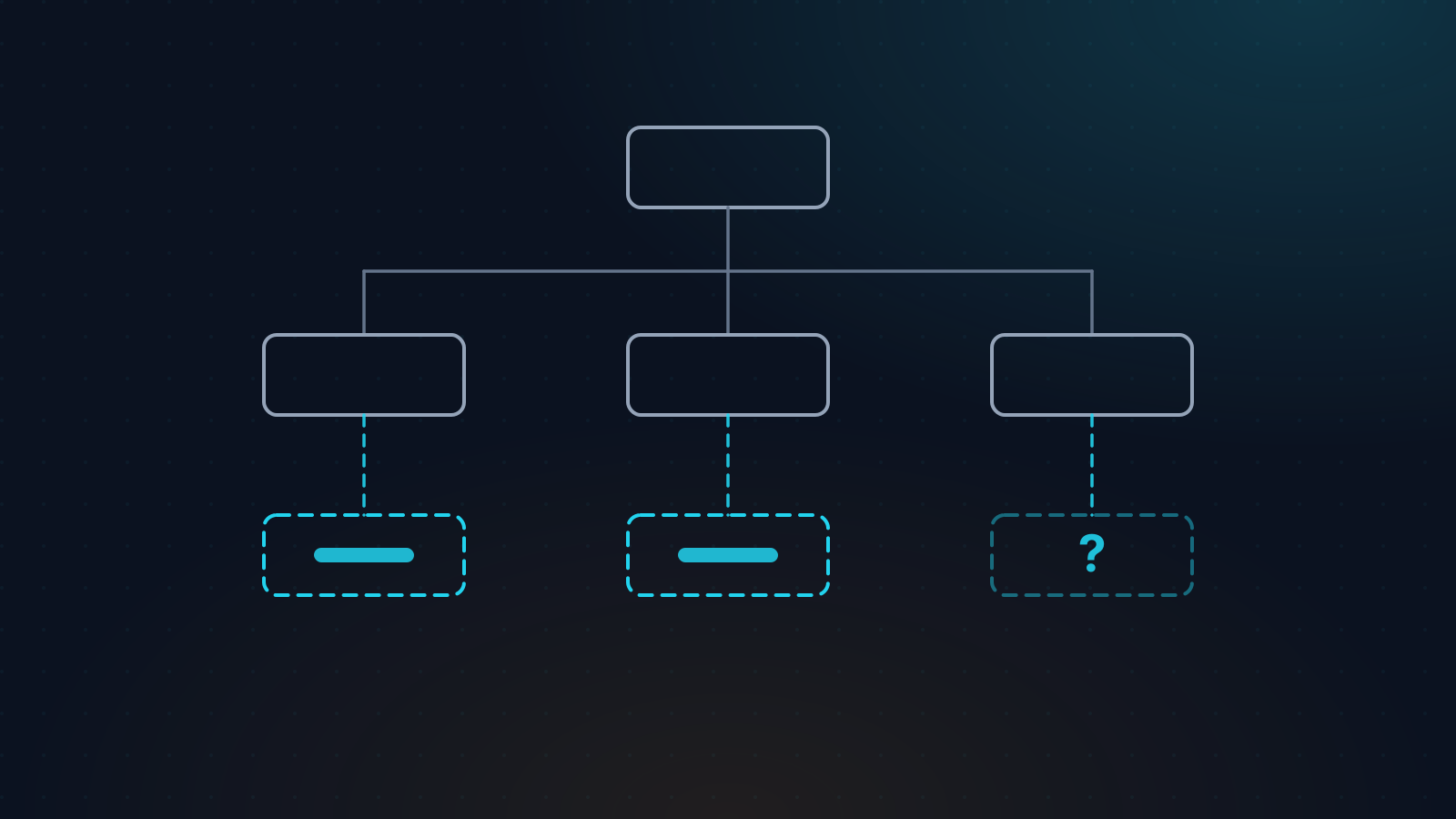
When a person joins your team, you give them a role, a manager, access to systems and a way to raise their hand when something goes wrong. An AI agent needs the same things. You have to decide what it is responsible for, what it can and cannot touch, how its work gets checked and what happens when it gets something wrong.
That is governance, not just engineering. And honestly, most organisations are not set up for it yet.
The pilot trap
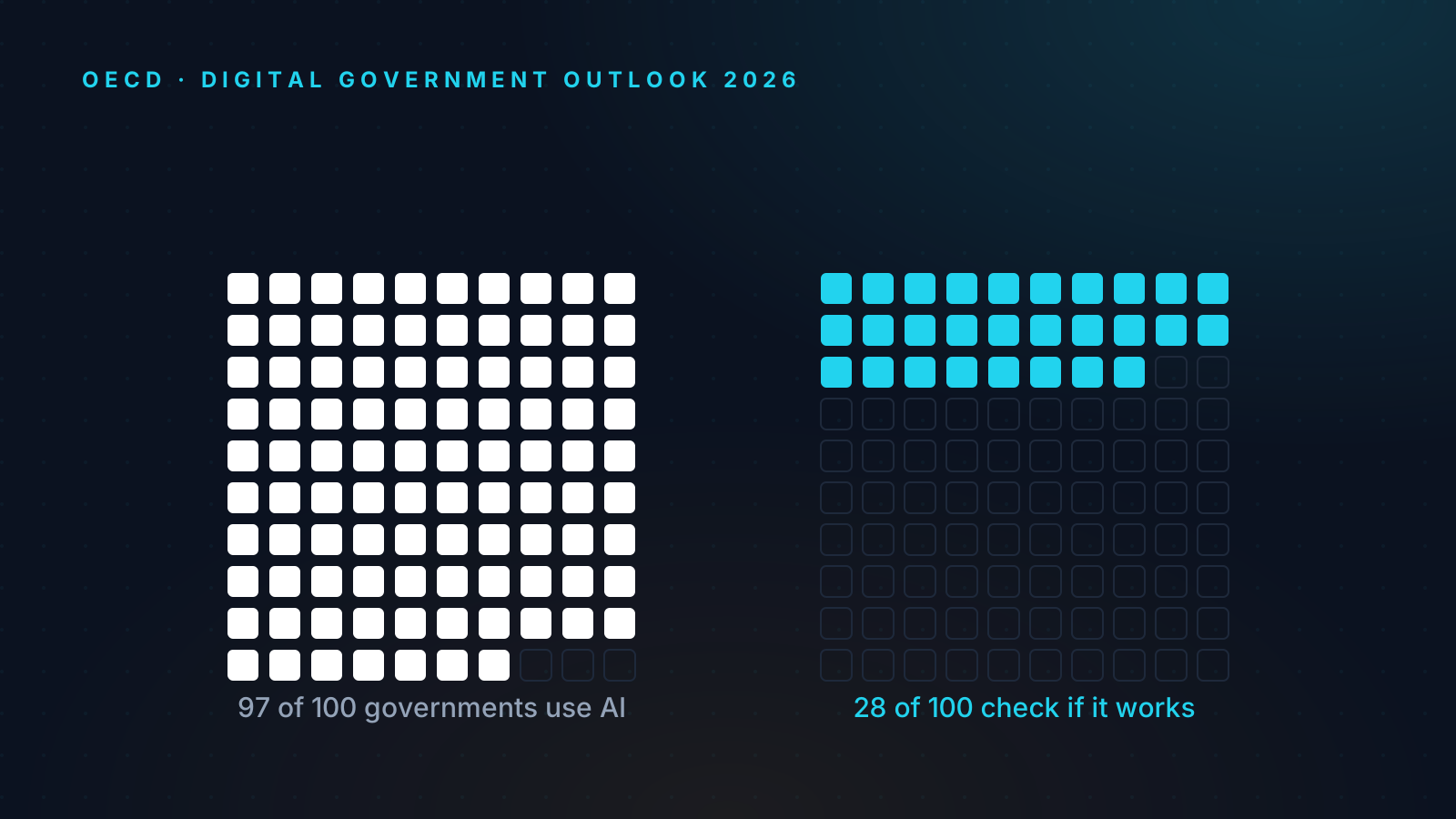
Most AI efforts stall after the pilot. The pilot works because it has senior attention, clean data and a handful of people who want it to succeed. Then the pilot ends and the real work starts: wiring it into live systems, onboarding people who did not choose the change, handling the edge cases and building the rhythm to keep performance up over time.
The gap between a slick pilot and a scaled operation is not more technology. It is operating model design, change management and leadership commitment. I have watched that gap swallow good ideas.
The questions I make leaders answer
Before we put agents into real operations, I push every team through four questions.
First, what decisions is the agent actually making, and who is accountable for them? The agent executes. A person, or a governance structure, owns the outcome.
Second, how does the agent work alongside the people doing related work? Workflow integration is where most deployments quietly fall over.
Third, what do we do when the agent is wrong? You design the failure mode, you do not discover it in production.
Fourth, how do we explain the agent's decisions to the people affected by them? Trust is not a nice-to-have in transformation. It is the thing that makes adoption stick.
None of these are blockers. They are design questions. Getting them right early is exactly what separates the organisations moving AI from pilot to scale from the ones still admiring their demo.