
Agentic AINo. 015
Who tells the board?
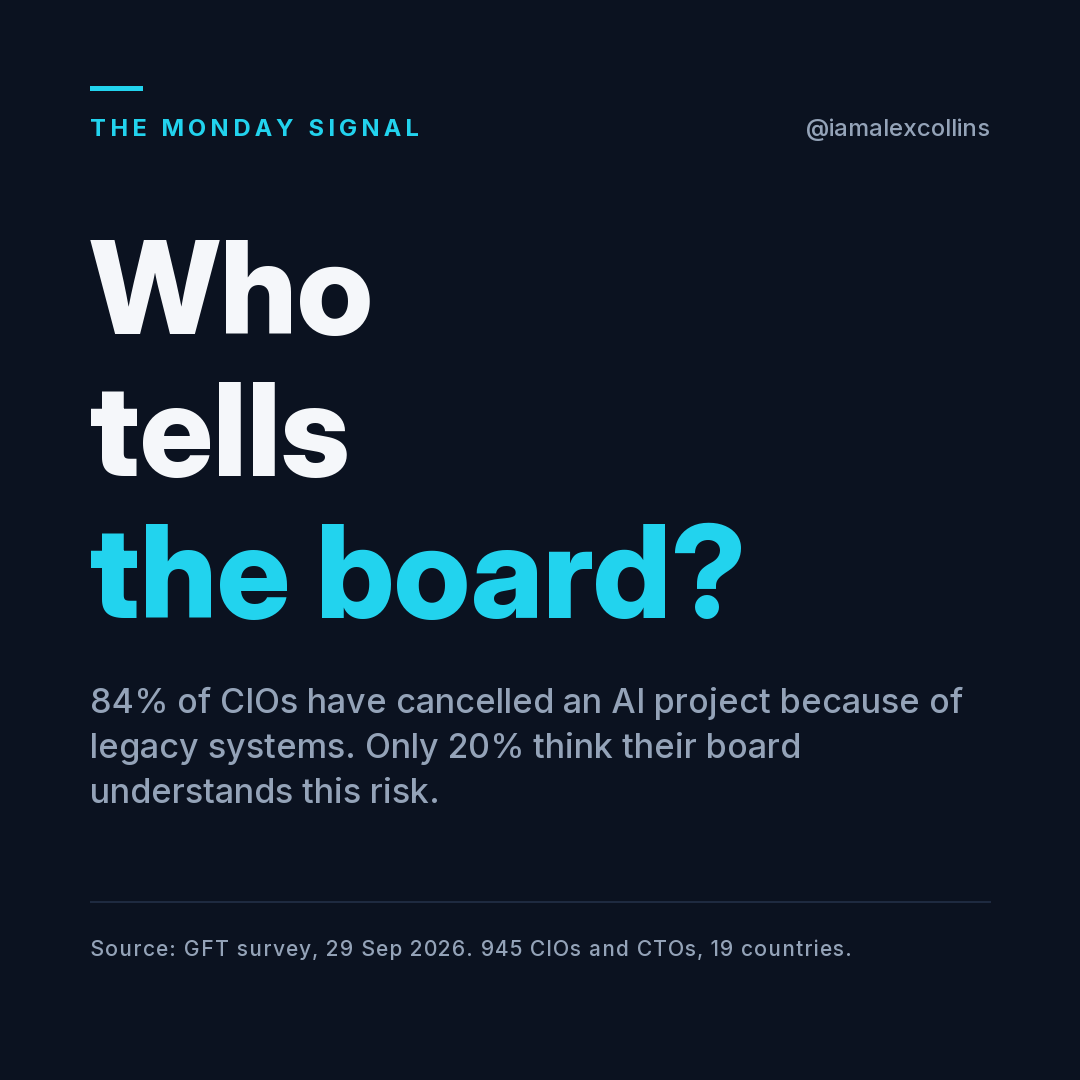
84% of CIOs have cancelled an AI project because of legacy systems, and only 20% think their board understands the risk. Whose job is it to tell them?
GFT Technologies · 26 Oct 2026→
How many AI pilots is your organisation funding right now?
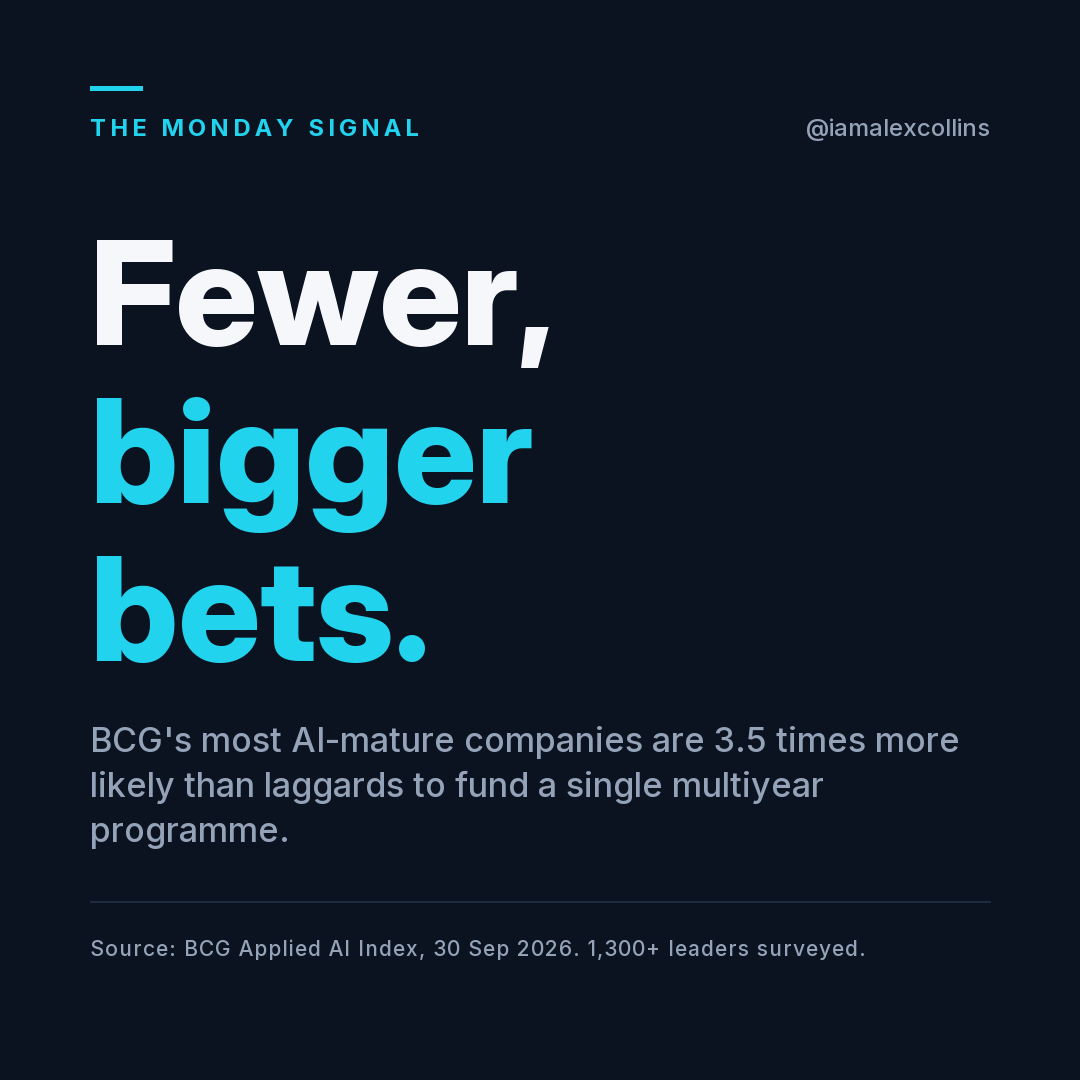
BCG surveyed more than 1,300 leaders and found that only 7.5% of companies are what it calls future-built, its most AI-mature group. They are 3.5 times more likely than the laggards to fund a single multiyear programme, and they concentrate it on fewer, higher-value workflows.
So what? This is exactly how I'm advising clients, and for two reasons. It takes time for the business change that delivers the results to happen, and a multi-year programme makes sure the people who develop these agentic systems are the ones who have to deliver the outcomes.
It should also put those delivering it on the hook for the outcomes, and reward them commercially when they land. Is your supplier on the hook for the outcome, or just for the time they spend?
The question I would sit with
If your AI programme missed its outcomes next year, what would it cost your supplier?
Alex Collins
Co-founder & COO of RAI Digital, a consulting venture builder · Ex-EY Consulting Partner · Writing on agentic AI, venture building, logistics platforms and transformation leadership.
One honest read every fortnight on what agentic AI is doing to consulting, and what to do about it. For people moving from advice to outcomes, rebuilding a firm, or done buying decks. No hype, no fluff.
84% of CIOs have cancelled an AI project because of legacy systems, and only 20% think their board understands the risk. Whose job is it to tell them?
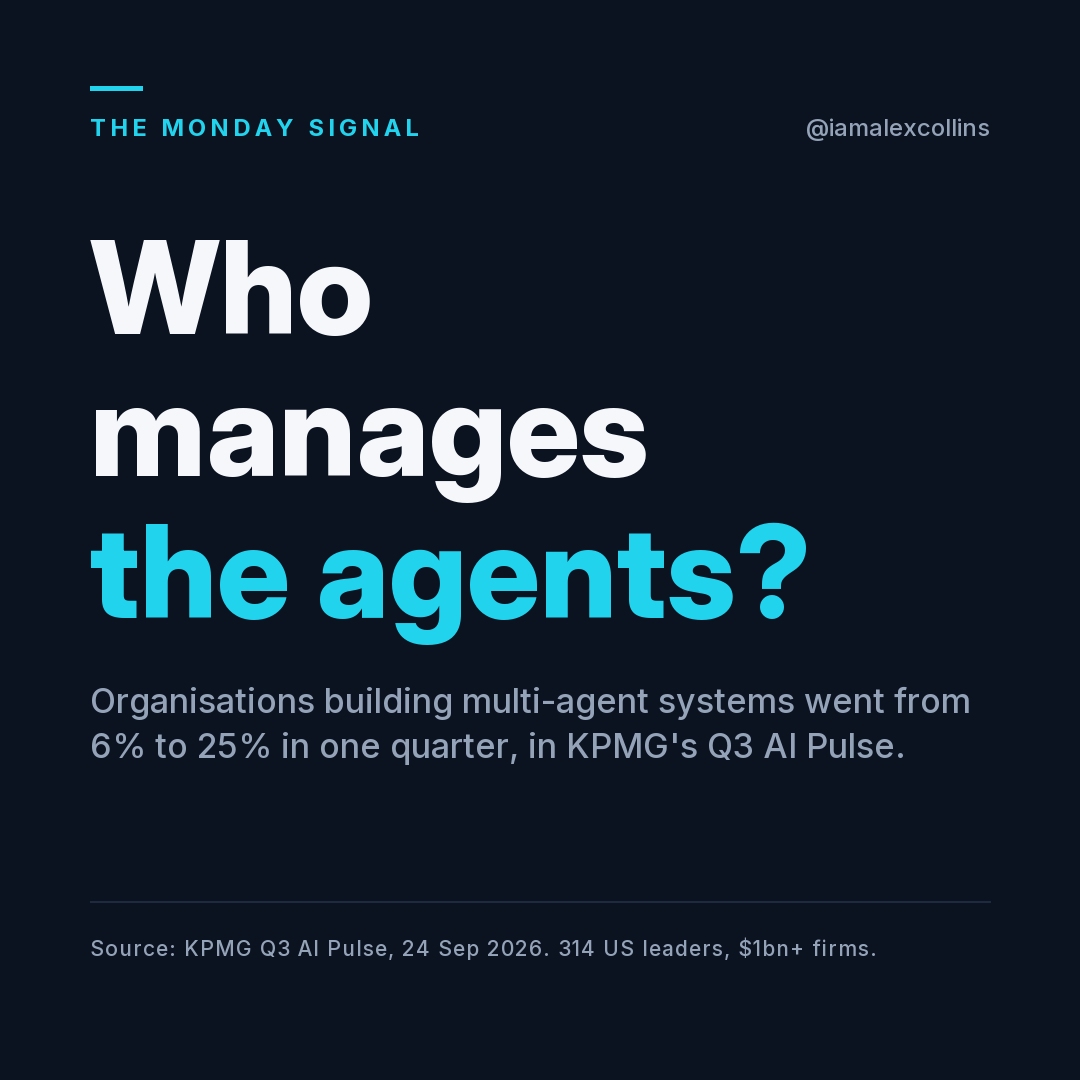
Multi-agent systems went from 6% to 25% in a single quarter. Once agents work with each other, who can say why something went wrong, or right?
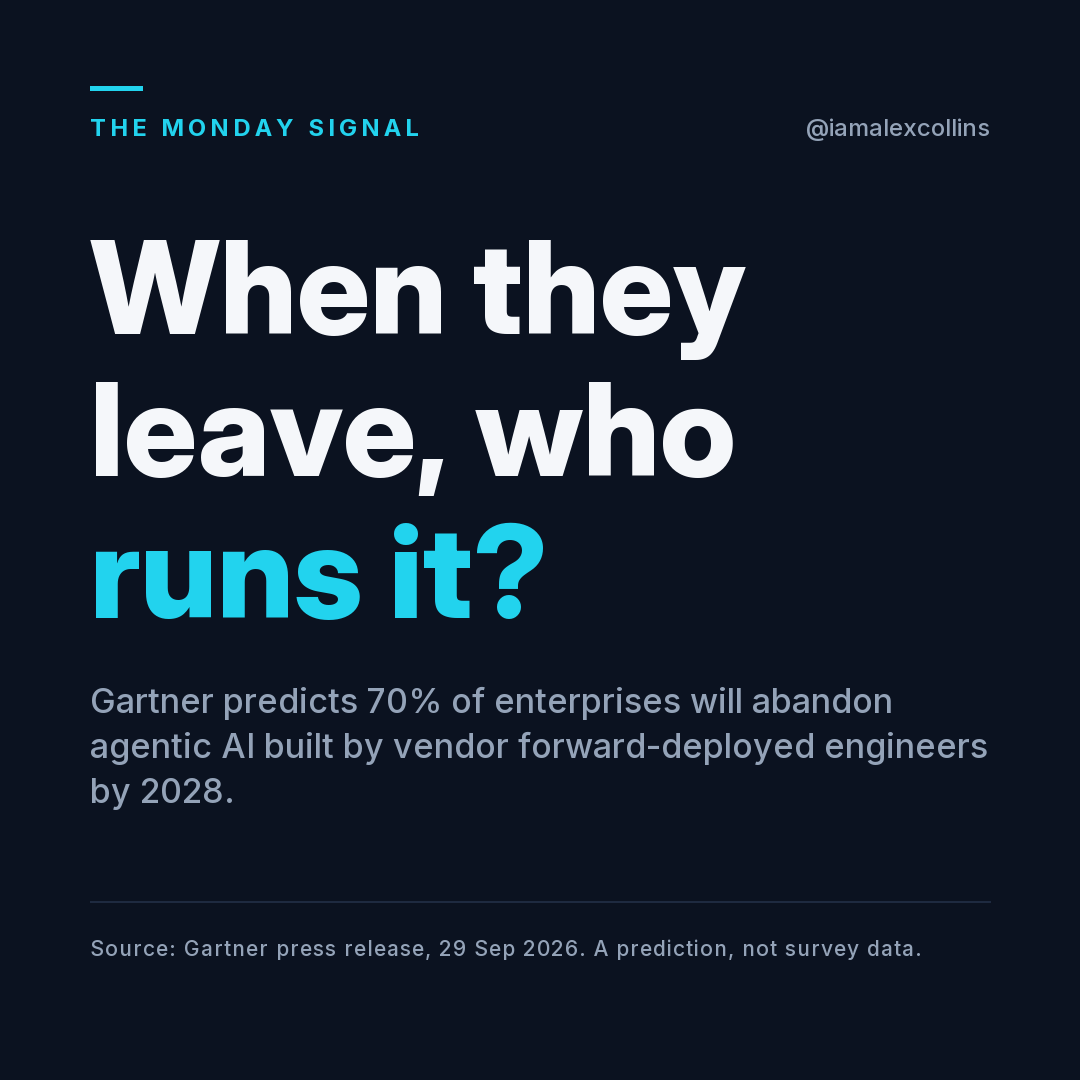
Forward-deployed engineering is a new name for an old question: when the people who built it leave, who takes over?