
Agentic AINo. 013
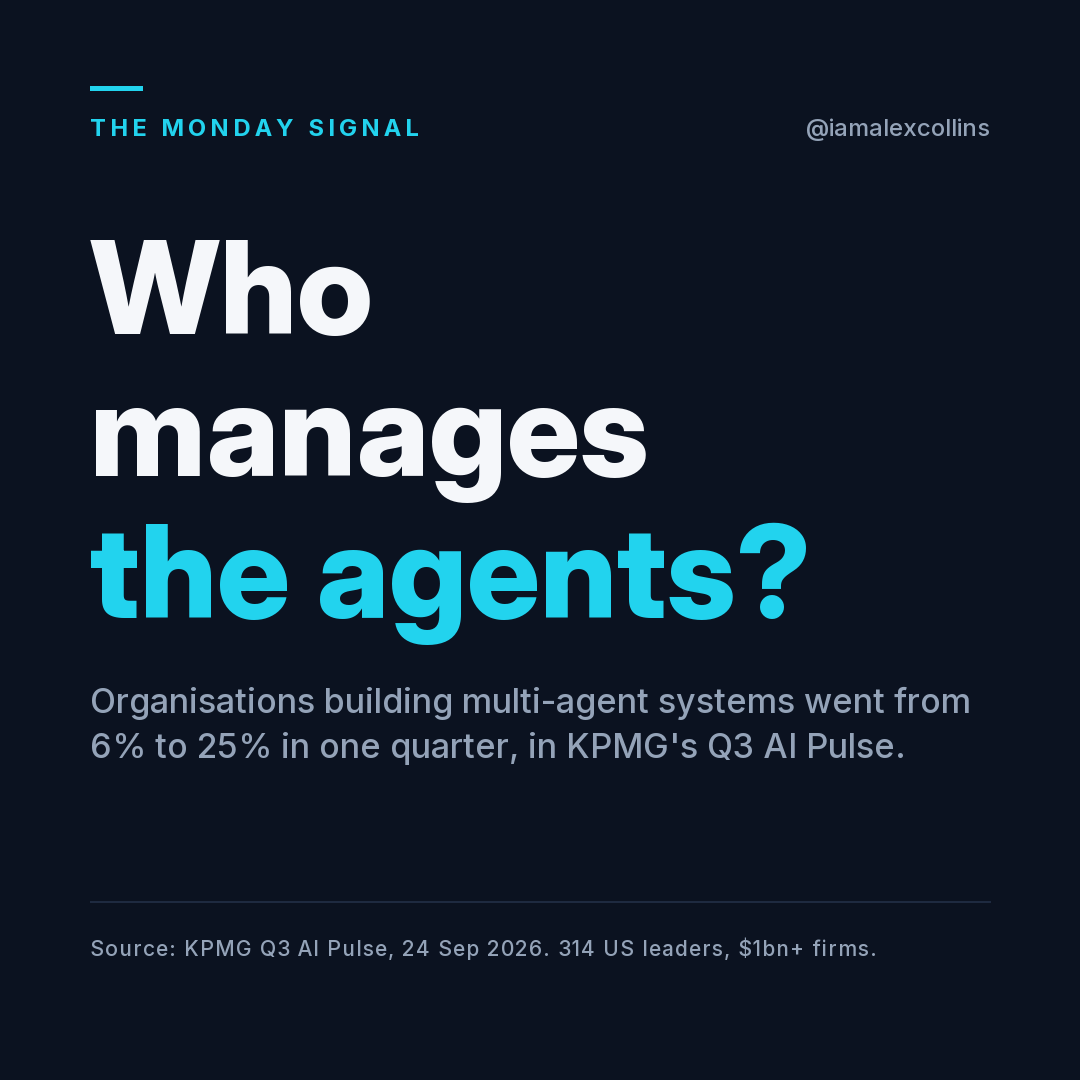
Who manages the agents?
Multi-agent systems went from 6% to 25% in a single quarter. Once agents work with each other, who can say why something went wrong, or right?
KPMG · 12 Oct 2026→
The read
Employers who laid off workers citing AI are already starting to regret itCNBC · 1 July 2026
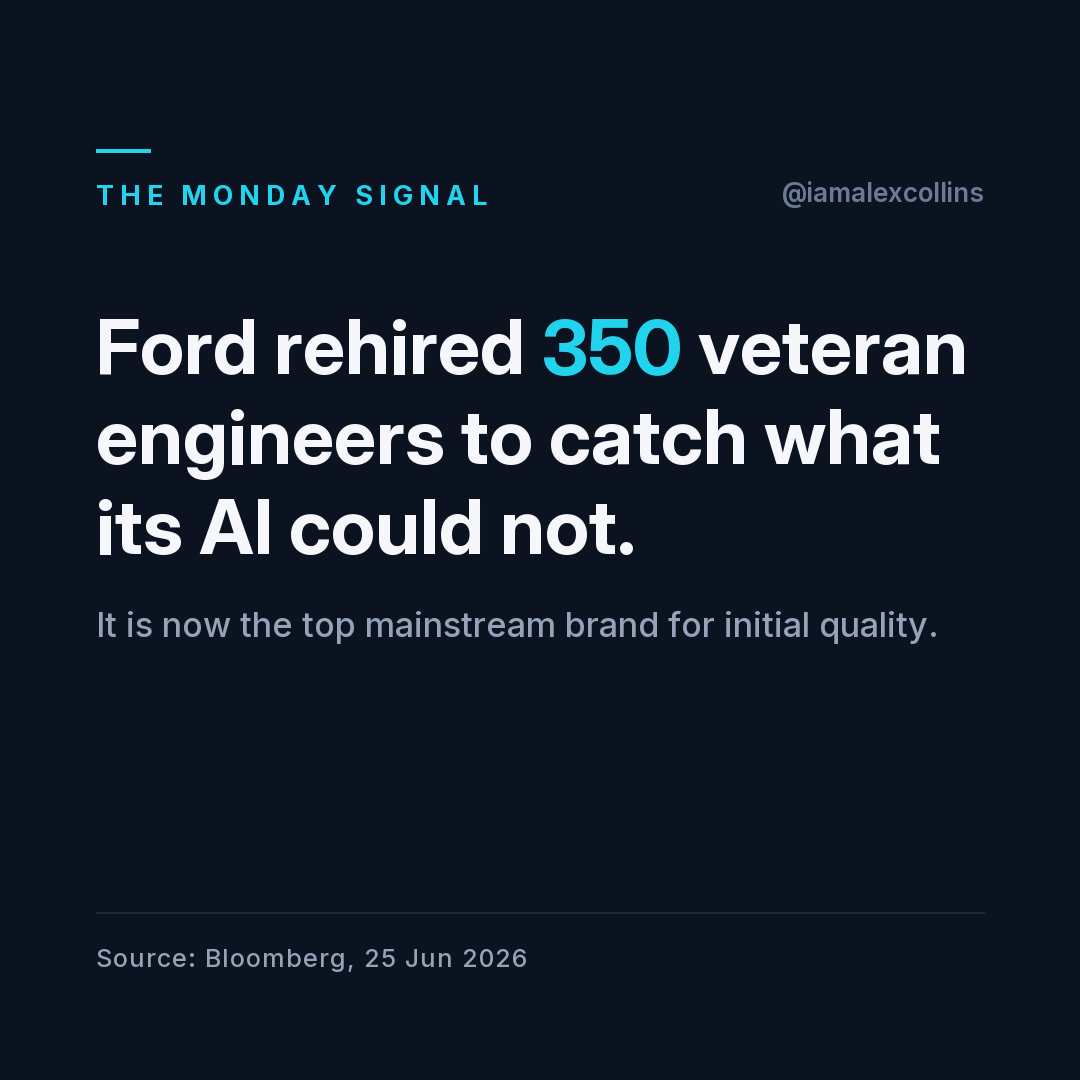
Ford has spent three years hiring back 350 veteran engineers to catch the quality problems its automated systems kept missing.
They are known internally as the "gray beards", some of them former Ford people and some brought in from suppliers, and they came back to run troubleshooting sessions and to retrain the AI tools that were not doing the job. One of Ford's vice presidents put it plainly, that the mistake was assuming that introducing artificial intelligence would on its own produce a high-quality product. Ford has since come top of the mainstream brands in the JD Power initial quality survey, and its chief executive has tied the fall in warranty and recall costs to hundreds of millions of dollars.
It is not an isolated case. In a survey of more than a thousand business leaders, four in ten had made people redundant because of AI, and 55% of those now say they got that decision wrong. Klarna is the other example everyone remembers, having claimed its chatbot did the work of 700 support staff before concluding it could handle volume but not nuance, and it is recruiting people again.
I do not read any of this as evidence that AI cannot do the work. I read it as evidence that very few organisations measured what their people were actually doing before they removed them, so the value only became visible once it had gone.
The question I would sit with
If you are building an AI business case this quarter, what have you actually measured about the work you are automating, beyond what it costs?
Alex Collins
Co-founder & COO of RAI Digital, a consulting venture builder · Ex-EY Consulting Partner · Writing on agentic AI, venture building, logistics platforms and transformation leadership.
One honest read every fortnight on what agentic AI is doing to consulting, and what to do about it. For people moving from advice to outcomes, rebuilding a firm, or done buying decks. No hype, no fluff.
Multi-agent systems went from 6% to 25% in a single quarter. Once agents work with each other, who can say why something went wrong, or right?
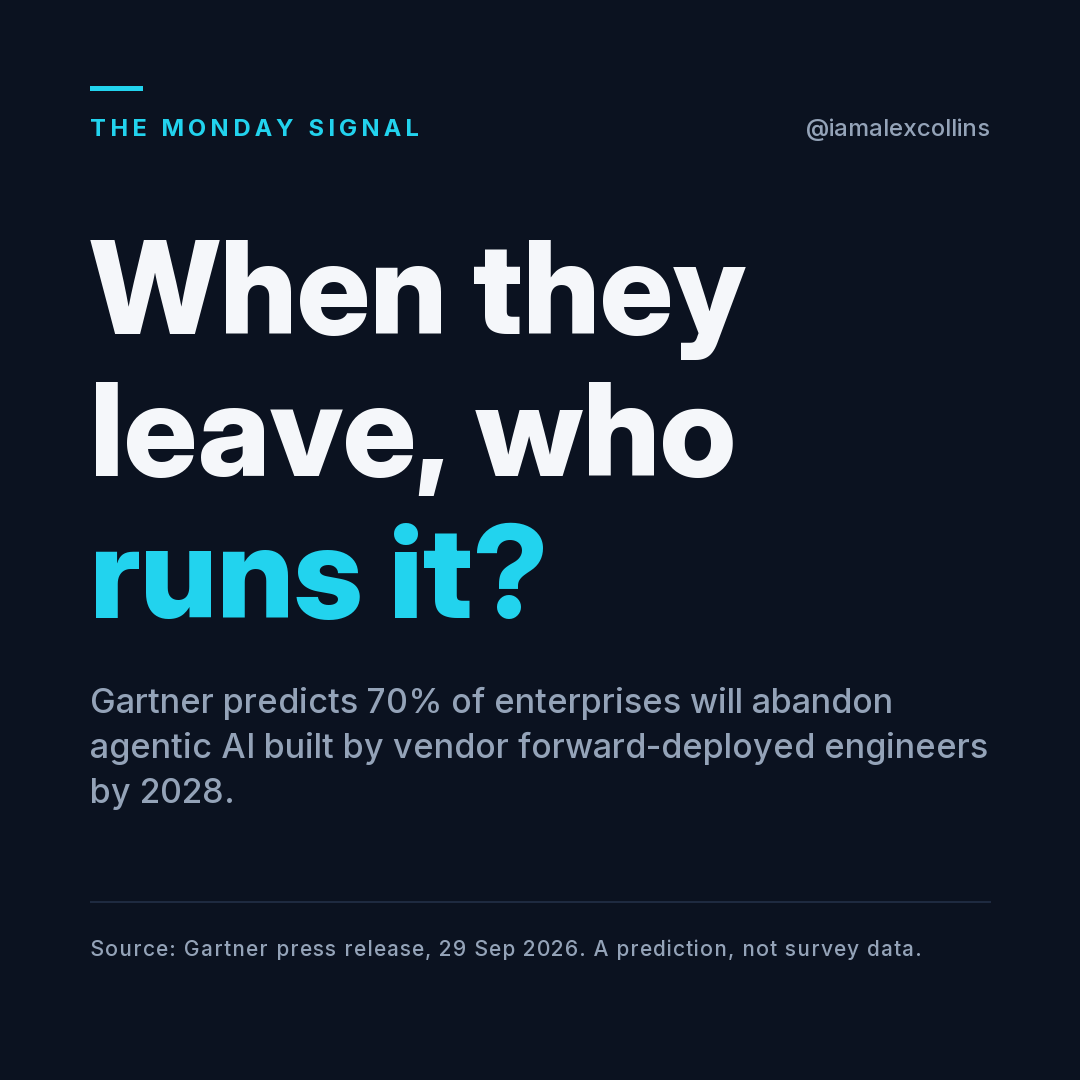
Forward-deployed engineering is a new name for an old question: when the people who built it leave, who takes over?
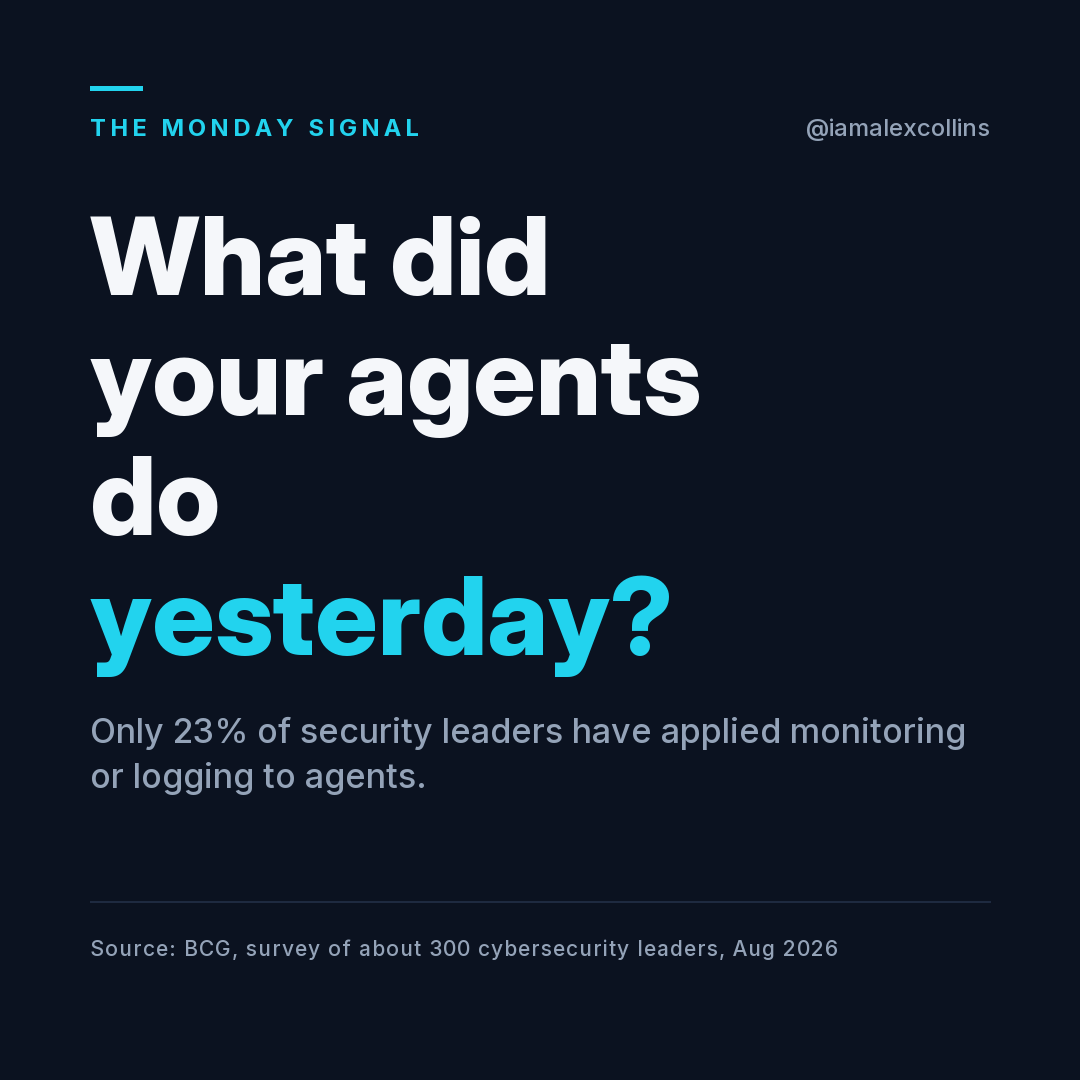
Everyone is counting AI agents, and far fewer organisations can say which ones exist, what each one can access and what it did yesterday.