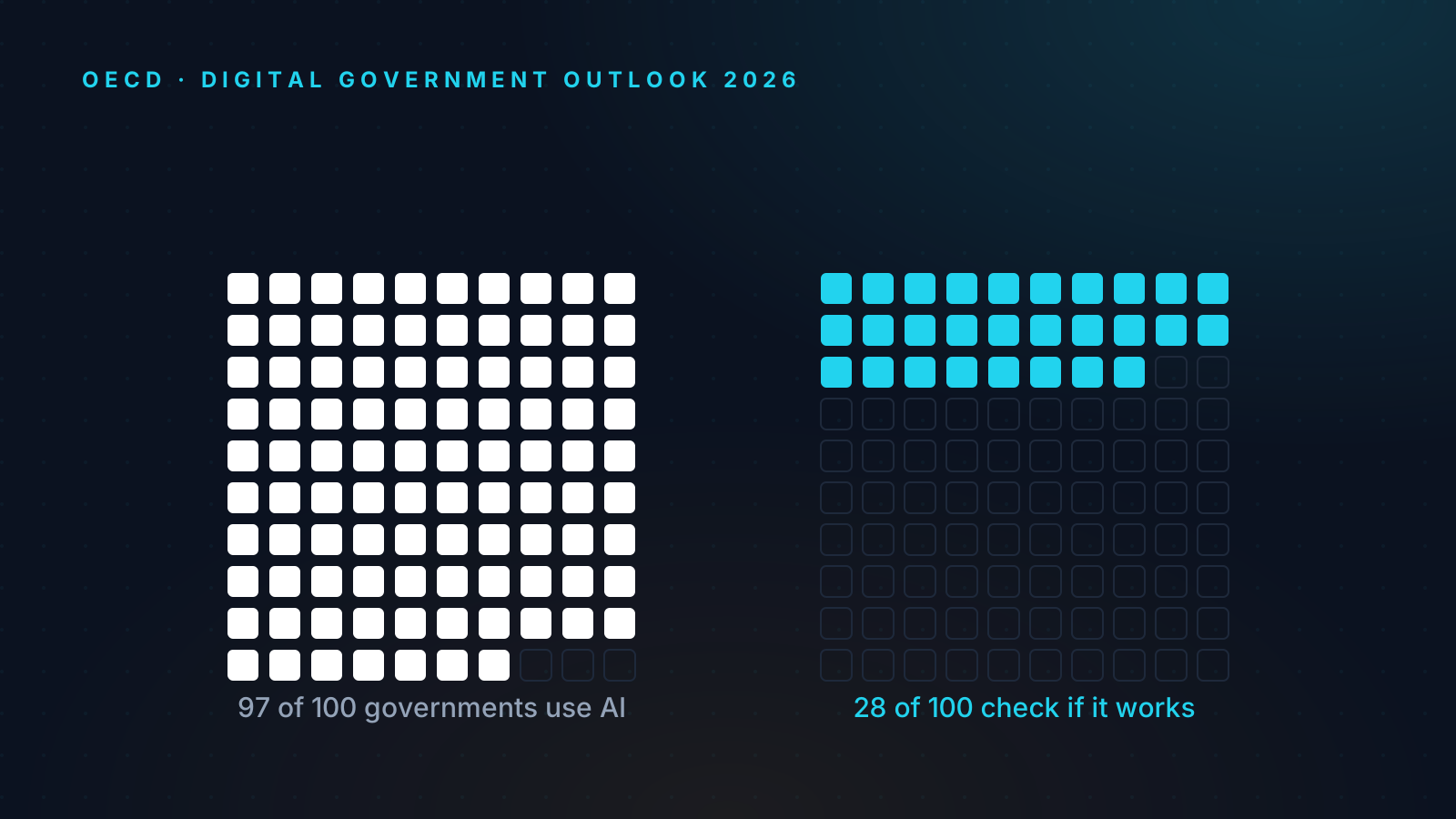
Last month the OECD published its first Digital Government Outlook. One number in it sums up where we are: AI is now used in at least one area of government in 97% of OECD countries. Almost everywhere. The experimentation phase is over.
That sounds like a success story, and in one sense it is. Nearly every country now has an AI strategy. 83% have an institution responsible for governing AI in the public sector. The foundations are in place. But adoption is not the achievement. Adoption is the starting line.
Here is the number that should worry every public sector leader. Only 28% of OECD countries report doing any assessment, financial or otherwise, of whether their AI use cases actually deliver. So almost everyone is using AI. Barely a quarter are checking whether it works.
This is how transformation becomes theatre
I have spent my career working on change in large, complex organisations, from the UK through the Middle East, across government and the private sector. The pattern the OECD just described in data is one I have watched play out in rooms for years. An organisation adopts the technology, runs the pilots, announces the strategy, mistakes the activity for the outcome.
AI makes this trap bigger, not smaller, because the technology demos so well. It is much easier than ever to stand up something impressive. It is hard to wire it into a live service so that a real person gets a better result. When you skip that second part you get AI theatre: lots of motion, a good story for the board, and no measurable improvement for the people the government is actually there to serve.
The user is not at the centre, and the data shows it
The Outlook is blunt about where most AI is being pointed. Uptake is strongest in internal processes focused on the backoffice operations. That is probably the easy part if we're being honest, but it's how we take AI to transform the experience for citizens and residents that really becomes the game changer.
So far, the citizen experience has barely moved. One phrase in the report stuck with me: government services "remain reactive." People and businesses still have to know what to ask for, when to apply and where to go. I've been hearing about proactive service design for over 10 years, but yet it's not here. The technology has changed and we still expect the user to take the actions. We are automating the inside of the machine without redesigning what it feels like to stand in front of it.
My view is that here is the biggest risk, not that AI will not "work", but that it gets put to work efficiently at the wrong thing, and governments are left wondering why the uplift they were promised never shows up in outcomes, in satisfaction, or in trust. And trust is already fragile: only 52% of people across OECD countries trust their government to use data and new technology well.
The hard part was never the technology
If I try to sum up what is happening, AI adoption is advancing faster than governments' capacity to govern it. Strategy is ahead of capability on the ground, The AI vision and models are ahead of the operating model.
This is exactly the gap I spend my time in, and it is a people problem long before it is a technology one. Closing it is change management work, and I mean that in the unglamorous, practical sense.
It means redesigning the actual workflow around the tool, not bolting the tool onto the old process. It means giving people the skills and the confidence to use it, the targeted training the report says is still missing for specific roles. It means being honest about accountability: who owns the outcome when the system gets it wrong. And it means earning trust deliberately, with the people using the tool and the people on the receiving end of its decisions.
You won't see this in the licence agreement, I'm afraid. It is leadership, culture and operating discipline, and it is the whole difference between a government that has adopted AI and one that gets something out of it.
What I would do about it
If I were advising a leadership team on this tomorrow, I would not start with the model. I would start with three questions.
1. What outcome are we actually trying to move, for which user, and how will we know if we did? If you cannot answer that, you are buying theatre.
2. Where does this sit in the real workflow, and what changes for the people around it? That is the change management plan, and it is most of the work.
3. How will we measure it honestly, including when it is not working? Put yourself in the 28% who check, not the 72% who assume.
The governments that get the next phase right will not be the ones with the boldest AI strategy. The strategies are already written, nearly everywhere. They will be the ones that did the patient, human work of turning that strategy into outcomes people can actually feel. That work has a name. It is change management, and it has never mattered more.