My first organisation design (OD to the pro's) project was back in 2008. The client was a huge global organisation, and the objective was to move the business onto a global shared services hub: pull work out of the local markets into a centralised team and a common technology platform, reduce cost, and drive efficiency and improvement along the way.
It took months and months of hard work and analysis just to establish the current state, reading job description after job description simply to get to an honest baseline of who actually did what, before we could even begin to design the future state. Then the harder part: mapping people to roles and roles to outcomes, and doing all of it inside the dynamics of the company, its culture and its values, the things that actually decide whether a redesign will work.
The great thing was I learned early in my career the methodology how to do that properly, as well as learning from what actually happened as the changes were made (sometimes the opposite of what was planned!), has served me for the best part of two decades. But, Agentic AI now genuinely changes the question.
The question has changed, not just got harder
For years, organisation design was a question about roles and headcount: what roles do we need, who fills them, how do they report to one another. Agentic AI turns it into a different question, and a different question does not have the same answers. I just read an interesting piece from McKinsey that triggered me to write this article, their thinking on rewiring talent to value: agentic AI changes "who, or what, does the work".
Once an agent can own a workflow from start to finish, and not just speed up a task inside it, the unit you are designing around stops being the role and starts being the outcome. Which outcomes genuinely need a person? Which can an agent own end to end? And where does a human need to step in, to handle the exception, make the judgement call or carry the accountability? You cannot answer those by bolting agents onto the chart you already have. Start there and you simply automate tasks inside roles that may not need to exist in their current shape at all. Start from the outcomes instead, and you design the work properly, then decide what mix of people and agents delivers each one.
Talent to value, with agents in the picture
There is an old operating idea that a small number of value-critical roles drive a disproportionate share of the value in any organisation. Get those roles right, put your best people in them, and a lot of the rest follows. It is a good idea and in a lot of cases it's still true. What changes is that the value-critical unit is no longer only a role. It is an outcome, and increasingly that outcome is delivered by a person and an agent working side by side, with the human overseeing the decisions, the exceptions and the results.
So the talent-to-value exercise now has a second column in it. For each value-critical outcome, you are not only asking who the best person is. You are asking what the agent owns, what the person owns, and where the line between them sits.
The agent concept is missing entirely
Here is the gap I keep seeing, and it is bigger than a missing box on a chart. In most organisations the agent concept is simply absent from the design.
Ask yourself honestly:
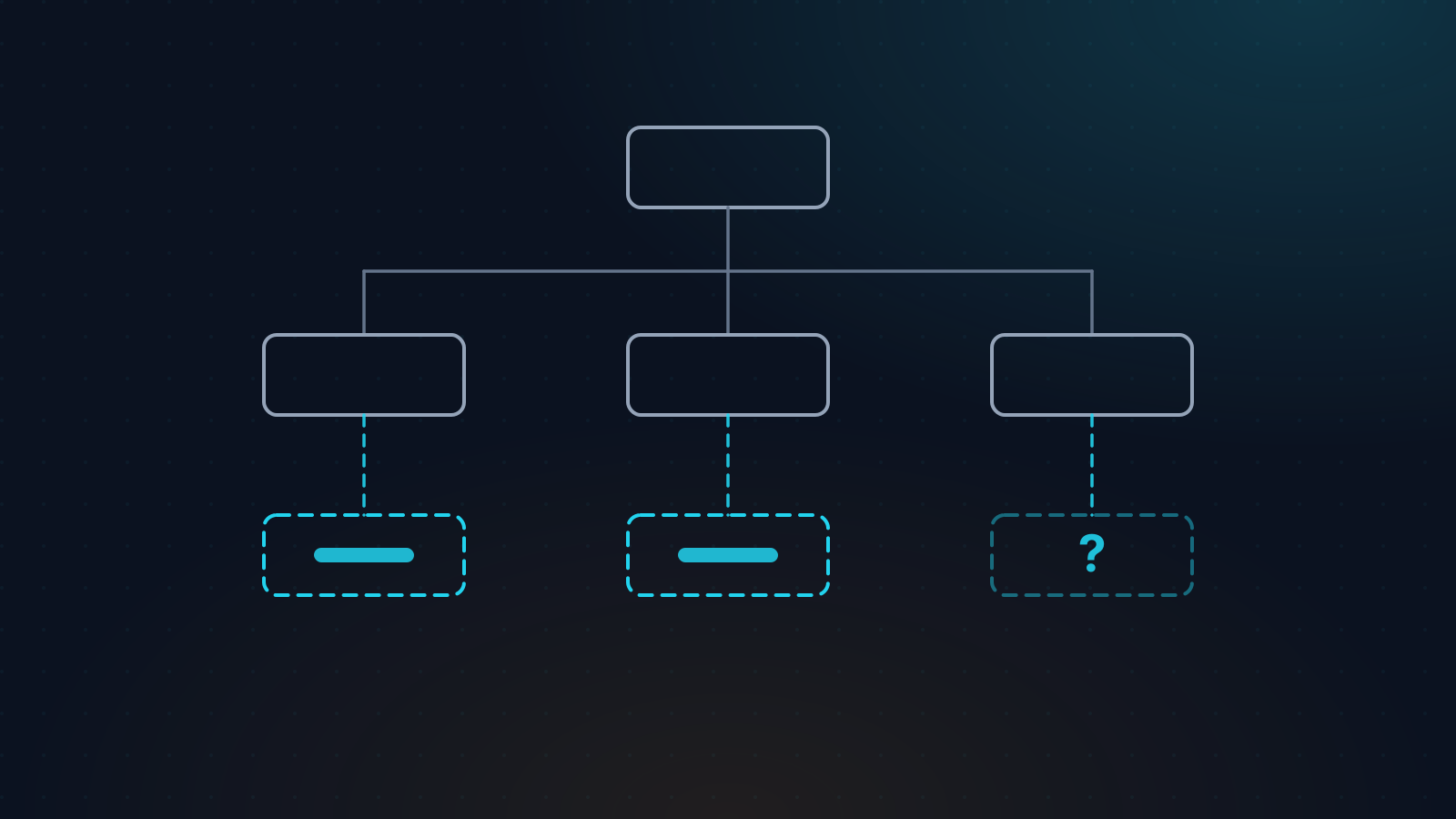
* how many org charts have you seen with agents actually named in them?
* With a manager's expectations of those agents written down the way they would be for a person?
* What the agent owns and what it is allowed to execute?
* Where a human sits in, on or out of the loop?
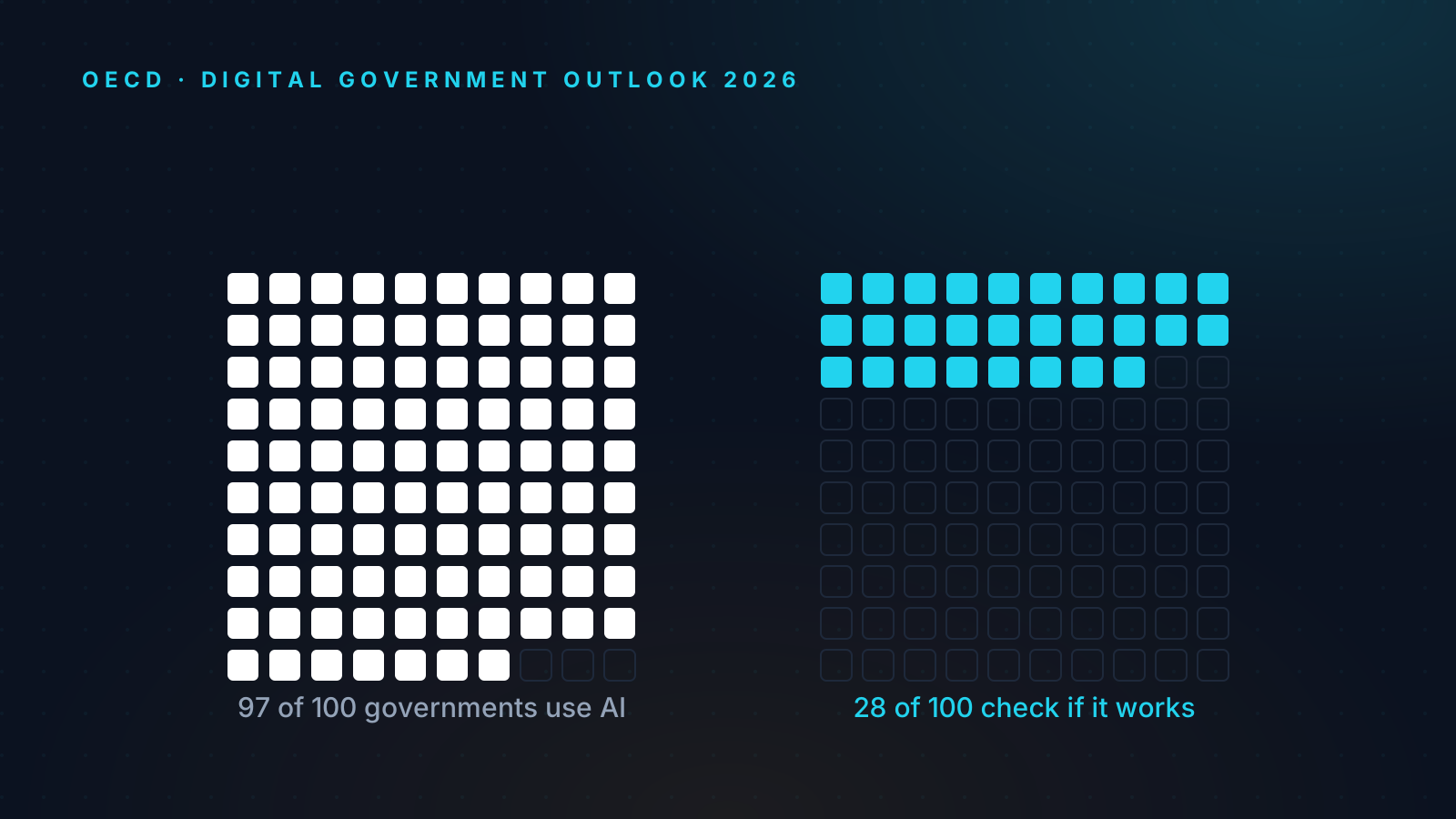
Almost none? The agents are already doing real work in the business, and yet they exist nowhere in how the organisation is designed or managed.
In the work I do now this is a live question rather than a theoretical one, because some of it means running real operations where part of the work is genuinely done by agents. The instinct to take an agent and map it onto an existing job description is almost always the wrong move. You design around the outcome, decide what the agent owns and what the person owns, and the roles reshape themselves around that.
Three questions for designing the hybrid team
When I work through this with a team, I push them through three questions, and they are deliberately about design, not governance.
1. First, which of these outcomes actually need human judgement, and which only need it some of the time? Start from the outcome and be honest. Some need a person throughout. Some need a person only at the exception. Some do not need one at all once the workflow is sound.
2. Second, what is the genuinely value-critical work here, and how does an agent change each piece of it? An agent might absorb the routine part of a role and free the person to do more of the work that actually creates value. That is usually a better outcome than treating the agent as a cheaper copy of the person, especially for your top talent.
3. Third, where does the human sit, in the loop or on the loop? In the loop means a person is part of every decision. On the loop means the agent runs and a person supervises, intervening on the exceptions. Choosing deliberately between those two, outcome by outcome, is most of the design.
This is a leadership job, not an IT one
None of this is procurement or IT. Redrawing the workforce around outcomes, deciding where people add the most value and being straight with them about how their role is changing is leadership work, and it can be uncomfortable work. People do not experience an agent as a neutral productivity gain yet in a lot of places. They experience it as a question about their own value and their own future, and if you do not address that honestly, the design on paper will not survive contact with the team, back to the change management lessons I learnt from my first project nearly 20 years ago.
That is the part I care about most. Done well, this is not about removing people from the work. It is about pointing them at the parts of the work where a human genuinely matters, and letting the agents carry the rest.
Your takeaway, give it a try now
Take one team and redraw its chart with the agents on it. Put the people in their boxes, then add the agents next to them:
- what each one owns
- what it can execute, and
- where a human is on the loop.
The first time you draw that picture honestly, you usually find the same thing. The work is already more hybrid than your org chart admits, and designing it on purpose beats letting it happen by accident.