
Agentic AINo. 015
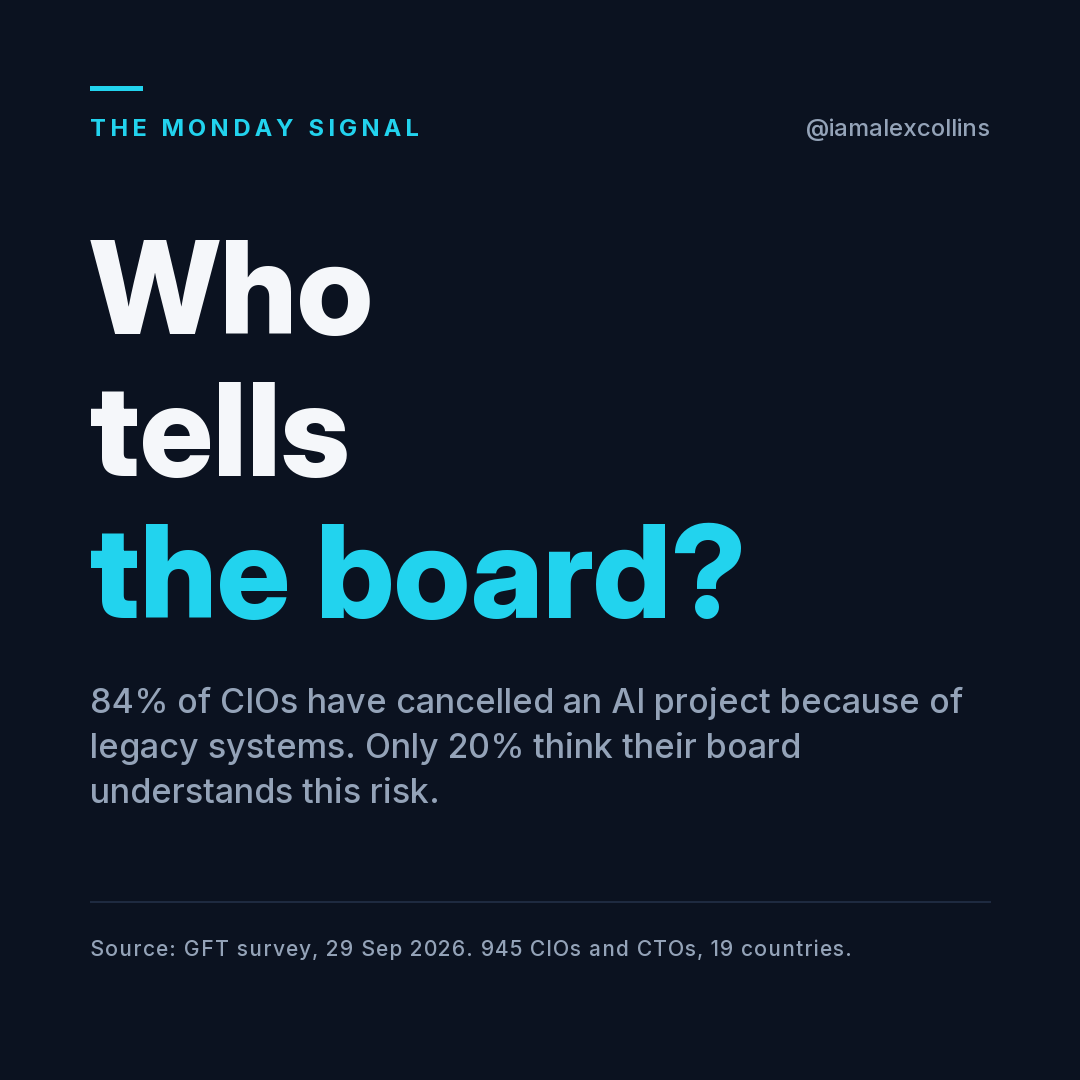
Who tells the board?
84% of CIOs have cancelled an AI project because of legacy systems, and only 20% think their board understands the risk. Whose job is it to tell them?
GFT Technologies · 26 Oct 2026→
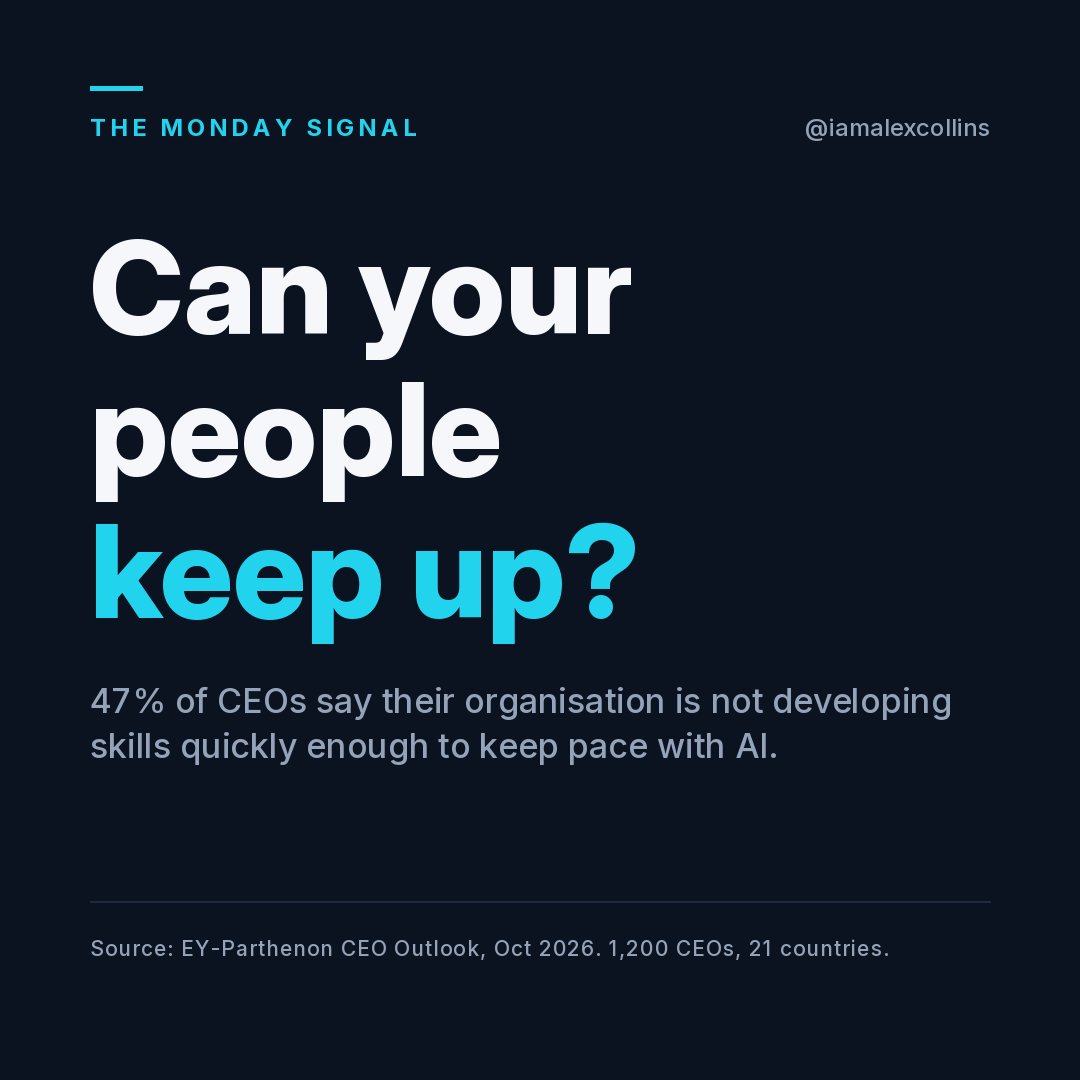
Are your people keeping up with your AI?
EY-Parthenon asked 1,200 CEOs in 21 countries how AI is paying off, and 47% said their organisation is not developing skills quickly enough to keep pace with AI.
So what? This matches my experience of leaders who are struggling to see both the real-time cost and the returns of AI. On its own, AI finds it hard to generate a return without the transformation and change happening alongside it. I also see pockets of cost appearing all across organisations, which makes it even harder to track centrally, and when you do try to control it from the centre you tend to stifle innovation, by creating processes that limit people's ability to use frontier models and the latest technology.
So the big takeaway for me is this: how do you make sure your staff are keeping up with AI, so that the skills shortage in your organisation doesn't become the limiting factor? Looking ahead, 72% of these CEOs expect skills shortages to become a bigger barrier to growth than access to capital within 3 years.
The question I would sit with
Who in your organisation owns making sure people's AI skills keep pace with the tools?
Alex Collins
Co-founder & COO of RAI Digital, a consulting venture builder · Ex-EY Consulting Partner · Writing on agentic AI, venture building, logistics platforms and transformation leadership.
One honest read every fortnight on what agentic AI is doing to consulting, and what to do about it. For people moving from advice to outcomes, rebuilding a firm, or done buying decks. No hype, no fluff.
84% of CIOs have cancelled an AI project because of legacy systems, and only 20% think their board understands the risk. Whose job is it to tell them?
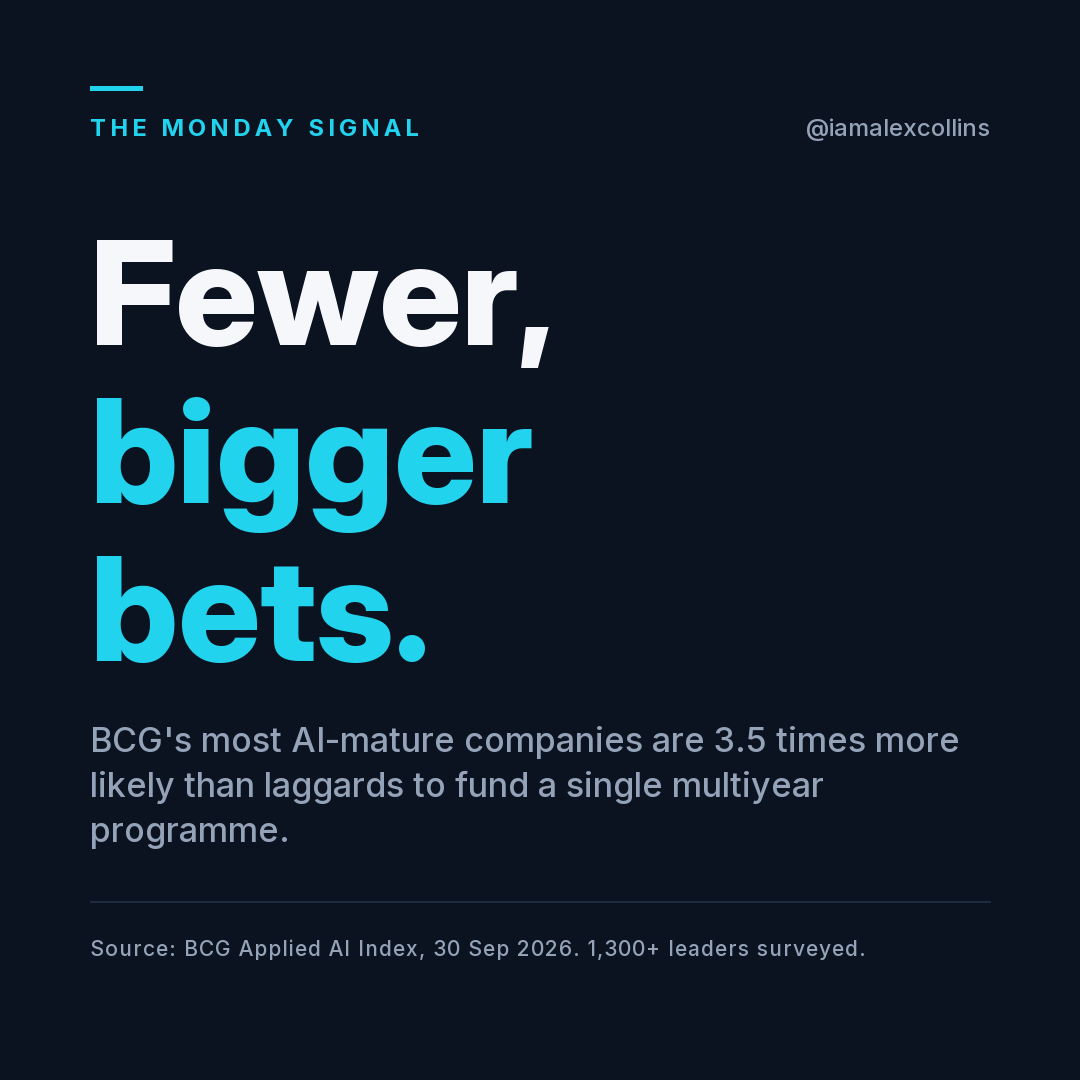
Only 7.5% of companies are what BCG calls future-built, and they are 3.5 times more likely to fund a single multiyear programme. Who is on the hook for the outcomes?
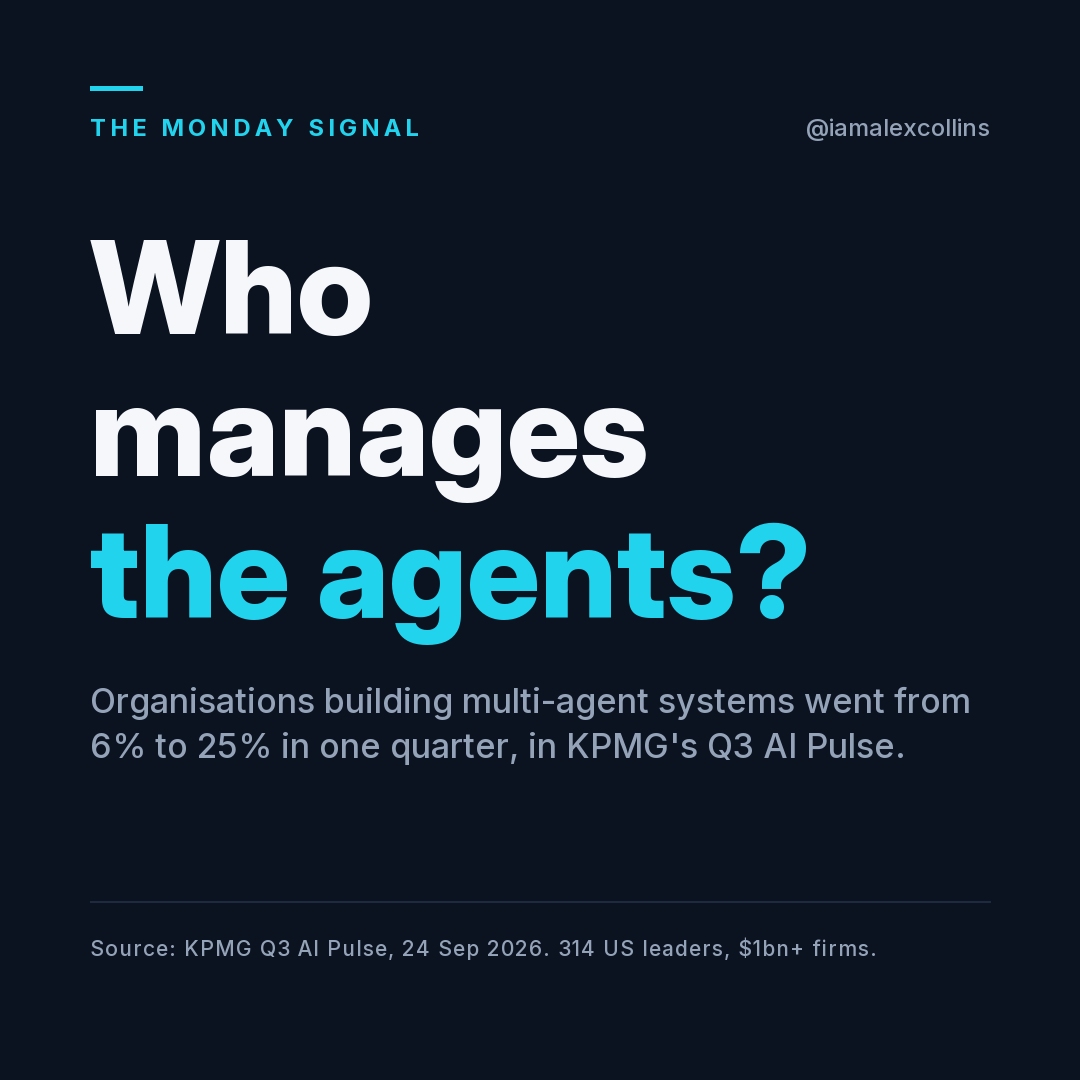
Multi-agent systems went from 6% to 25% in a single quarter. Once agents work with each other, who can say why something went wrong, or right?